
For some forgotten reason, during my sophomore year in college I ran for and was elected secretary of my fraternity. This was a bad idea on my part and a massive miscalculation on the part of my fraternity brothers, who assumed that as a college student I possessed the ability to carry out official fraternity business, deadlines and all. That was the year we almost lost our charter. At the end of my term the representative from our national office paid us a visit. He was not thrilled, and wanted to know why we hadn’t turned in any paperwork for either of the last two semesters. (Thankfully I hadn’t been elected treasurer.) Standing in my disheveled, Bob Marley be-postered room, he asked to see my files. I didn’t have any.
It wasn’t a common diagnosis back then, but I suffered from severe executive functioning inability. Most of my students have a similar bent. Their backpacks are where important papers go to die. Spoons, crumpled field trip permission slips, bits of string, tennis balls, creased algebra quizzes, rotting orange peels, and broken pencils all collect and coalesce on the bottom. Their binders contain the mysteries of middle school – assignment sheets they didn’t know existed, grammar notes from seven months ago, handouts that have been liberated from the constraints of the 3-ring system and have been optimistically stuffed somewhere within the beaten covers, sandwiched between yesterday’s missing homework and tomorrow’s forgotten study guide.
Executive functioning covers a broad range of activities, but in my experience the two most challenging areas for boys are maintaining an organized life and planning out their assignments. These behaviors are changeable, but it’s not easy. The bad news is that, if left unchecked, many boys don’t figure this out until they’re men – if ever – and at that point it’s not called poor executive functioning, it’s called not having their shit together.
The good news is that most guys can benefit from immediate help in these areas – help which you can provide. In the educational world, we call this “scaffolding.” In the regular world, we call this “doing it for them until they can do it themselves.”
Your basic job is to fight entropy, whether caused by laziness or inability. Here’s how.
An Organized Life. This consists of backpack, binders, pencil case, locker, study space, archive binder, and home study supplies. It is a rare middle school boy that can handle all of this on his own. You can help by making sure these are in order. It’s a bit like how I imagine a military inspection, or at least how it’s portrayed in Stripes. Organization checks should happen at least once a week. A word of warning – as you probably know, your middle or high school boy won’t be happy about you auditing his stuff. This is why I have a job. Developmentally, it’s better if this can be done by a man who holds some authority (father, uncle, etc.), rather than a woman, but having it done by mom is much better than not having it done at all.
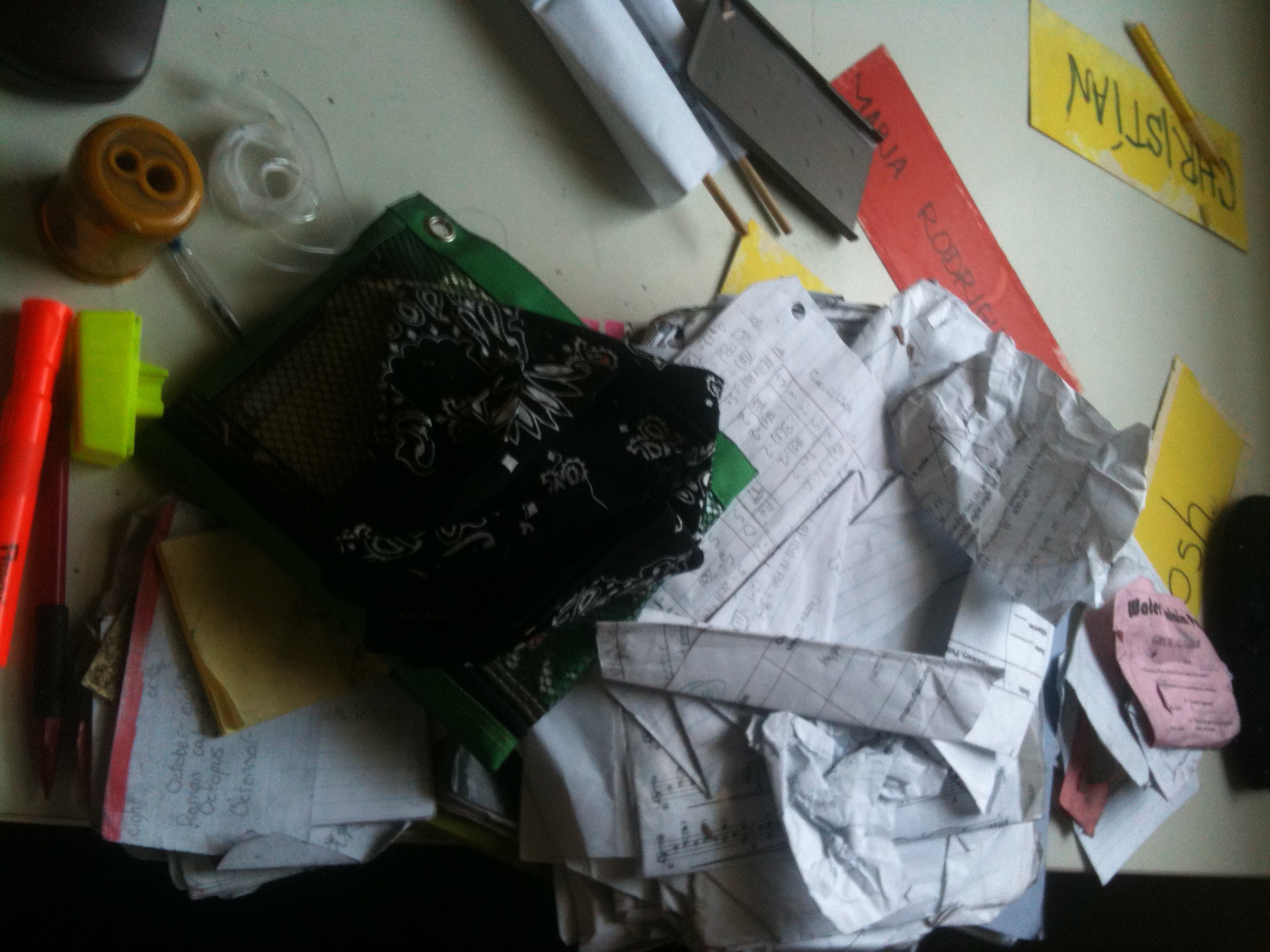
Backpack: Empty completely – all books, binders, other crap. Loose writing utensils go in the pencil case. Now’s a good time to do the binder check. All other trash/important papers/old food/singleton socks should be handled accordingly. The first time I check a student’s backpack, it often looks like this:
 Binder(s): If single-subject, should be 5 tabs unless otherwise specified by the teacher. These are: Homework, Notes, Handouts, Quizzes/Tests, and Paper. For most subjects, either 1-inch or ½-inch is good. If multi-subject (not acceptable for H.S.), then there should be tabs for each subject. Avoid pocket tabs, which allow students to stuff papers into a pouch. All papers should be 3-hole punched and filed in the right spot. If some papers need have their holes reinforced, reinforce them with binder reinforcers; it just takes a minute. In the absence of binder reinforcers, scotch tape and a 3-hole punch will do. Refill lined paper if it’s low. Archive old, unnecessary papers. Binders should have front and back pockets, but those shouldn’t be overflowing – a few recent papers are fine, but nothing ridiculous.
 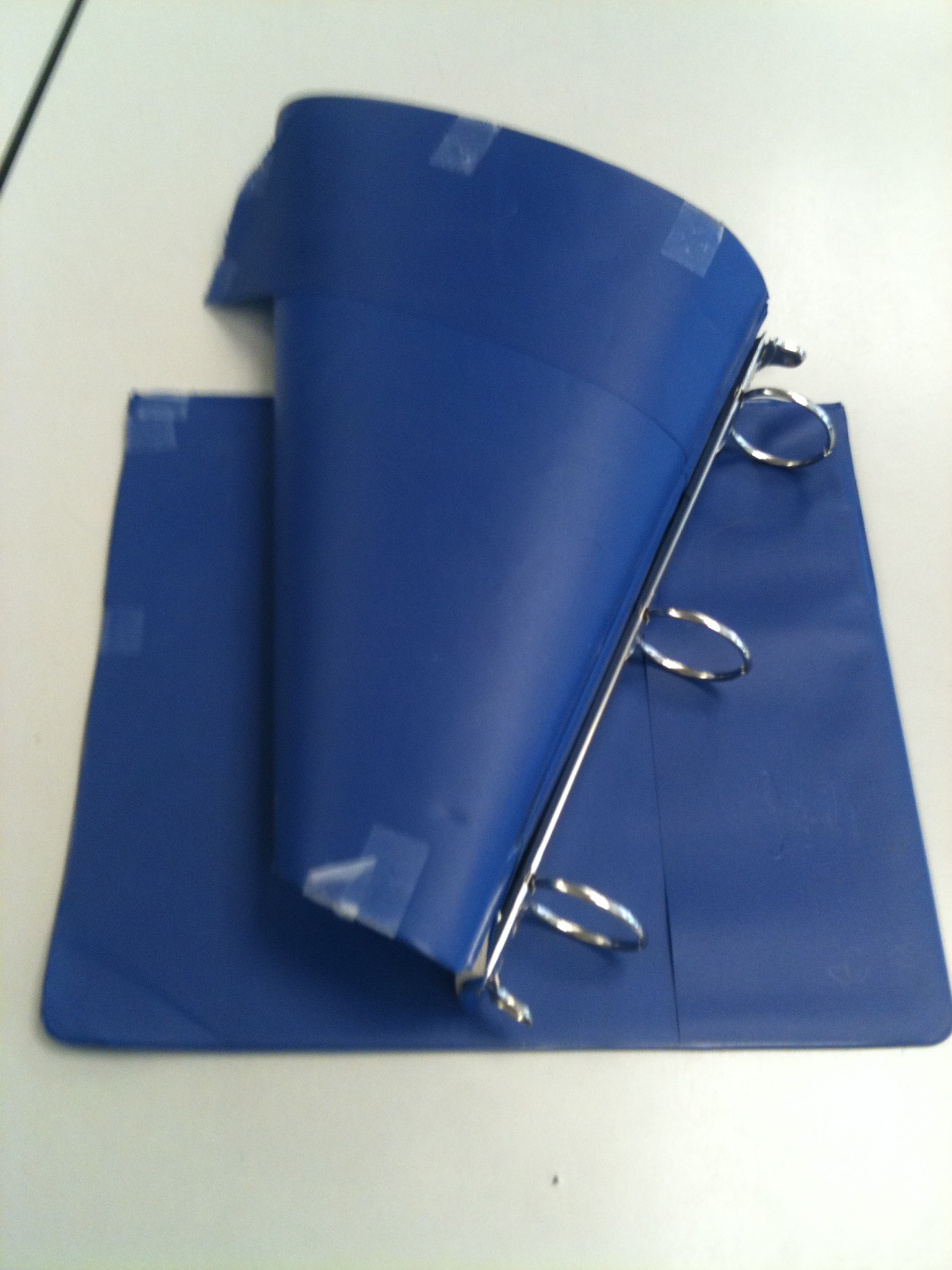 Avoid broken, breaking, torn binders – toss and get new ones. I like single click openers best, but just stay away from the cheapest ones. The minute a ring starts to fail the binder is useless, because it’ll just start ripping up all the pages and making school life hell. Avoid this:
Pencil Case: Some students want to have a pencil case in each binder. This strikes me as overkill and redundant, but whatever works. I usually recommend one that stays in the backpack. It should have pencils, pens, pencil sharpener, erasers, white-out, glue stick, small scissors, a few rubber bands. And not 25 pencils and 15 pens, nor 2 pencils and a single pen. Shoot for 5-10 of each. When you check this, toss pencils that don’t have erasers – literally break them and throw them away. I know, shame. But they’re a waste of space, and Ticonderogas are 15 cents a pop: get over it. Sharpen dull pencils, check pens for ink, replenish supplies as needed.
A Clean, Well-Lighted Place to Study: This is a point of contention among most of my guys. My rule, which they don’t like, is that studying in the bedroom is not allowed. Or at least it’s highly discouraged. That’s where all the distractions are, and there’s also less chance of being caught screwing around, which encourages screwing around – or at least doesn’t discourage it. Dining rooms, kitchens, the study/den, wherever there’s a good flat surface and relative quiet is fine. It’s your job to respect this space and prepare it for your student.
Archive Binder: This lives at home. It’s a large binder (2 or 3-inch), tabbed out to cover each subject. For high schoolers, you may need two. When units are done and no longer referenced, rather than throwing them out or letting them take up space in the binder, archive them. Chances are they’ll never be needed, but if they are – there they are. Basic rule is never throw out any school paper, just archive it instead. A good place to keep this is with the home study supplies.
Home Study Supplies: This is similar to the pencil case, but better. It can be in a nearby cupboard, a box (especially good if you have a two-household family), or a drawer – just make sure that all the supplies are in one spot. They are: scissors, 3-hole punch, binder reinforcers, lined paper, blank printer paper, sharpie, pens, pencils, erasers, binder clips, rubber bands, dictionary (small is okay until college). The basic idea here is that home is base camp and school is the wild. Replenish at home for the chaos of school.
Locker: Yup, this one’s the hardest. Few middle schoolers are eager to bring their parents to school and show off their locker organization. Teachers and tutors are excellent in this regard. Locker checks don’t have to happen as frequently, but if your kid is really disorganized, get it done. The low maintenance way is to give your child a duffel bag and tell him he needs to put everything from his locker in it at the end of the day (just on locker cleanout day, not everyday). Then you can go through it and take out all the crap in the comfort and privacy of home, rather than in front of his peers. The high maintenance way – trucking down to the school and laying out the locker contents on the hallway floor in front of all his friends – is a good deterrent and should reinforce the benefit of the low maintenance way.
 The Misorganized Mind